
Interstellar Objects and the Limits of Interpretation
Constraints, substrates, and non-threatening intelligence signatures, with 3I/ATLAS as a reference case

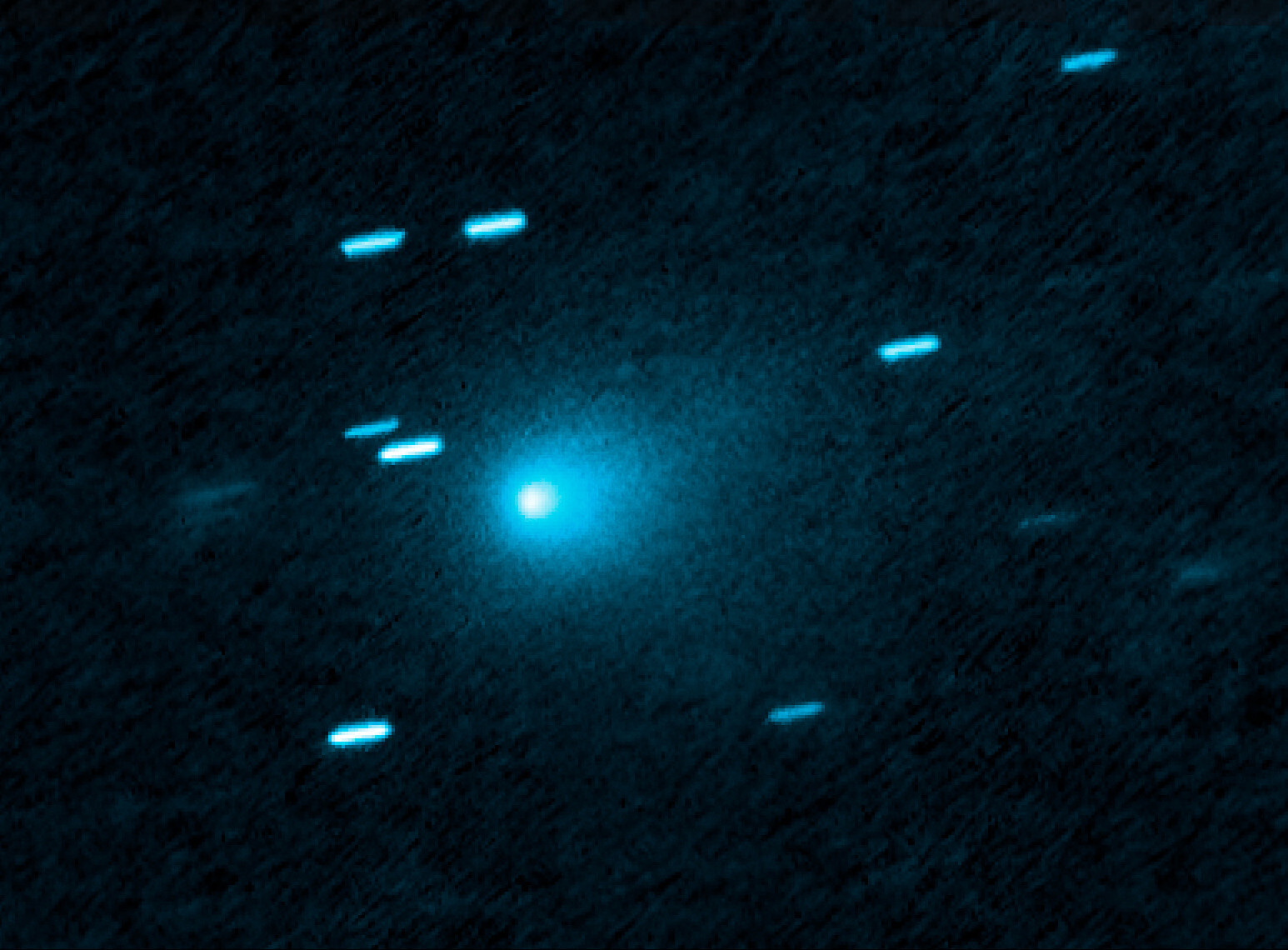
What this essay is (and isn’t)
This is a speculative, but methodologically grounded, exploration of how advanced intelligence might behave if it made use of natural interstellar bodies, such as cometary objects.
It does not argue that any known object - including 3I/ATLAS - is artificial, inhabited, or intentional. Nor does it speculate about motive or origin. Instead, it focuses on how such possibilities could be examined without abandoning scientific restraint.
This essay is written for scientifically literate readers who are comfortable with uncertainty and willing to engage careful, bounded speculation. No specialist background is assumed, but readers should expect density and nuance rather than simplified conclusions.
Constructive disagreement and alternative framings are welcome; the intent here is inquiry, not persuasion.
Each section can be read independently.
I. Interstellar Objects as a New Observational Regime
Why objects like 3I/ATLAS stress our interpretive frameworks more than they threaten us
The detection of interstellar objects passing through the Solar System represents a qualitatively new observational regime in planetary science and astrophysics. Unlike near-Earth objects (NEOs) or long-period comets originating in the Oort Cloud, interstellar objects are not gravitationally bound to the Sun and therefore arrive without a shared formation history or well-characterized population context.
Their hyperbolic trajectories immediately distinguish them dynamically, but their significance extends beyond orbital mechanics. Interstellar objects confront observers with a class of bodies for which many standard assumptions - composition, thermal history, internal structure, and statistical priors - are either weak or absent altogether.
The first confirmed example, 1I/ʻOumuamua, demonstrated how limited observation windows, unfamiliar physical behavior, and incomplete models can strain existing interpretive frameworks. Subsequent detections, including 2I/Borisov and more recent candidates such as 3I/ATLAS, suggest that such objects are not singular curiosities but representatives of a broader, previously inaccessible population.
Importantly, the scientific challenge posed by interstellar objects is not primarily one of hazard assessment. In most cases, impact probabilities are negligible or nonexistent. Rather, the challenge is epistemic: how to characterize and interpret bodies that arrive with minimal warning, transit the inner Solar System on timescales of months, and depart before high-confidence models can fully converge.
The central difficulty is not danger, but interpretation under severe uncertainty.
This novelty has practical consequences. Observation time must be rapidly allocated across multiple instruments and wavelengths; independent teams must generate parallel orbit and physical models; and uncertainties must be communicated clearly despite incomplete data.
The increasing visibility of coordinated international response - through observatories, space agencies, and UN-affiliated networks - reflects this novelty rather than any inferred threat. These responses are best understood as exercises in preparedness and interpretive discipline, ensuring that detection, characterization, and communication pathways function coherently under conditions of limited information and elevated public interest.
From a scientific perspective, interstellar objects occupy a liminal category. They are simultaneously familiar - sharing many characteristics with comets and asteroids - and fundamentally alien, having formed under astrophysical conditions that cannot be directly reconstructed. As such, they invite careful scrutiny not because they demand extraordinary explanations, but because they expose the boundaries of existing explanatory frameworks.
It is within this context - of constrained data, strained models, and expanding observational capability - that questions of interpretation arise. Before any particular hypothesis is entertained, it is necessary to understand how interstellar objects differ from well-studied Solar System populations, and why those differences warrant both caution and openness in analysis.
Any discussion of more speculative possibilities must therefore begin with constraints, not conclusions.
II. Constraints on Advanced Intelligence
What any technologically advanced system must obey, regardless of intent
Before considering how advanced intelligence might behave in interstellar contexts, it is necessary to establish the constraints under which any such intelligence would operate. These constraints are not speculative; they arise directly from known physics, information theory, and risk management considerations. Importantly, they apply regardless of motive, origin, or sociocultural context.
In this section, “advanced intelligence” is used as a functional placeholder for technological capability exceeding current human systems (without assumptions regarding biological form, intent, or social organization). The emphasis here is not on agency or purpose, but on the operational limits that would shape observable behavior.
Physical constraints
Any technological system operating over interstellar timescales must contend with strict physical limits. Energy availability, thermodynamic efficiency, and material durability impose hard boundaries on what is feasible. High-energy emissions are costly, difficult to sustain, and easily detectable across vast distances; sustained inefficiency would rapidly become prohibitive.
Similarly, thermal management presents a nontrivial challenge. Systems that dissipate large amounts of waste heat risk standing out against cosmic background levels, particularly in otherwise cold environments. From a purely physical standpoint, low-power, low-temperature operation is favored for longevity and concealment alike.
Radiation exposure, micrometeoroid impacts, and mechanical degradation further constrain design choices. Over millions of years, even rare events accumulate. Any long-lived technological system would need to prioritize robustness, redundancy, and passive stability over complexity or precision.
These considerations alone suggest that highly visible, energetic, or dynamically aggressive behaviors would be disfavored, irrespective of intent.
Informational constraints
Interstellar space is an information-poor and noise-dominated environment. Communication across stellar distances faces severe attenuation, long delays, and uncertainty about the presence, nature, or interpretive frameworks of potential observers.
Under such conditions, active signaling becomes a high-risk strategy. Signals may go unnoticed, be misinterpreted, or provoke unintended responses. Even benign transmissions could be perceived as hostile or destabilizing by an unknown recipient.
By contrast, passive or incidental information exposure - signals embedded within otherwise natural processes, or detectable only through careful analysis - minimizes these risks. From an information-theoretic perspective, ambiguity and deniability may be features rather than flaws.
This does not imply communicative intent. Rather, it highlights that any detectable signature must be understood against a background where silence, subtlety, and redundancy are rational defaults.
Risk constraints
Perhaps the most underappreciated limitation is risk. Any advanced technological system interacting with unfamiliar environments or observers must manage not only physical failure modes, but interpretive ones.
Misclassification as a threat could trigger defensive or destructive responses. Even within human contexts, ambiguity often escalates rather than resolves conflict. In interstellar contexts, where shared norms and communication channels are absent, this risk is amplified.
As a result, behaviors that remain comfortably within the envelope of known natural phenomena would be strongly favored. Actions that provoke rapid attention, force premature interpretation, or collapse uncertainty into alarm would be maladaptive, regardless of benign intent.
From this perspective, indistinguishability from natural objects is not merely camouflage; it is a rational risk-minimization strategy.
Implications for observation
Taken together, these constraints sharply narrow the range of behaviors that would be both feasible and sustainable for advanced technological systems operating on interstellar scales. They favor:
low energy throughput
thermal and dynamical subtlety
long-term stability over short-term expressiveness
behaviors that tolerate misinterpretation without catastrophic consequences
Crucially, these constraints arise without invoking purpose or strategy. They are the result of physics, information limits, and uncertainty management alone.
If advanced intelligence were present in interstellar contexts, its observable signatures - if any - would therefore be expected to be faint, ambiguous, and easily confounded with natural processes. Detectability, under such constraints, becomes a matter of statistical pattern recognition and model stress-testing rather than signal decoding.
This framing does not suggest that anomalies imply artificiality. Rather, it establishes why certain classes of anomalies, if persistent across objects and models, might warrant careful attention without warranting alarm.
III. Cometary Bodies as Plausible Technological Substrates
Why natural interstellar objects satisfy multiple operational constraints simultaneously
Given the constraints outlined above, it is worth examining why certain classes of natural objects - particularly cometary or comet-like bodies - satisfy many of the requirements that long-lived technological systems would face in interstellar environments. This discussion does not presume intent or design; it considers only functional compatibility under known physical and observational limits.
Structural and environmental advantages
Cometary bodies offer a combination of properties that are difficult to replicate artificially at scale. Their interiors provide substantial mass shielding against radiation, micrometeoroid impacts, and thermal extremes, while their heterogeneous composition allows for mechanical damping and passive stability over long timescales.
Thermally, such bodies experience wide temperature gradients but generally remain cold, especially during extended interstellar transit. This naturally suppresses waste-heat signatures and favors low-energy equilibria. Any internal processes operating well below sublimation thresholds would be effectively insulated from external detection.
From a materials standpoint, the absence of precise geometric regularity - fractured interiors, porous matrices, irregular density distributions - further complicates external inference. These characteristics frustrate straightforward structural modeling while remaining entirely consistent with natural formation processes.
Dynamical plausibility and camouflage
Cometary bodies already exhibit complex, non-linear behavior under gravitational and thermal influence. Outgassing, fragmentation, and asymmetric mass loss introduce non-gravitational accelerations that are difficult to model precisely, particularly under limited observation windows.
This has an important implication: small deviations from purely gravitational trajectories are not only expected, but often poorly constrained. As a result, a wide range of subtle dynamical behaviors can be absorbed into existing natural explanations without requiring extraordinary assumptions.
Similarly, rotational states, tumbling behavior, and irregular light curves are common among small bodies. These effects mask internal structure and frustrate attempts to infer uniformity or symmetry, which would otherwise attract attention.
In this sense, cometary bodies occupy a category of objects where complexity is normative rather than suspicious.
Longevity and temporal alignment
Interstellar objects may persist for millions or even billions of years between stellar encounters. This longevity aligns naturally with any process operating on extended temporal horizons, whether biological, technological, or otherwise.
Crucially, such objects do not require continuous activity. Long periods of dormancy punctuated by brief episodes of interaction - thermal, gravitational, or observational - are entirely natural. Activity correlated with perihelion passage or increased irradiation would be indistinguishable from ordinary cometary behavior, even if internally mediated.
This temporal structure favors systems that tolerate uncertainty, delay, and incomplete interaction - conditions that are hostile to high-bandwidth communication but compatible with passive or observational strategies.
Observational indistinguishability
Perhaps most significantly, cometary bodies enjoy a high degree of observational forgiveness. Their expected variability, compositional uncertainty, and sensitivity to environmental conditions create broad error margins in modeling and interpretation.
As a result, even well-instrumented observations often yield multiple competing explanations that remain viable simultaneously. This ambiguity is not a failure of observation but a consequence of the objects themselves.
Within such a regime, distinguishing between natural complexity and engineered subtlety becomes exceptionally difficult. Importantly, this indistinguishability does not depend on deception; it arises naturally from the overlap between expected physical behavior and the limits of inference.
Implications for analysis
The suitability of cometary bodies as potential technological substrates follows directly from the constraints discussed earlier. They offer:
passive shielding and thermal suppression
naturally complex dynamics that tolerate modeling residuals
long-lived stability without continuous activity
observational ambiguity consistent with known physics
None of these properties imply artificiality. However, taken together, they identify a class of objects for which subtle, low-impact technological processes - if they existed - would be exceptionally difficult to distinguish from natural behavior.
This does not elevate cometary bodies to special status as explanations. Rather, it underscores why careful attention to such objects is warranted when exploring the limits of detection, interpretation, and model sufficiency in interstellar contexts.
The question, then, is not whether cometary bodies are artificial, but whether our existing frameworks are adequate to fully characterize them under all plausible conditions.
IV. Expected Behavioral Signatures Under Constraint
What might be observable - if anything - without implying intent or threat
If advanced technological systems were to operate within the constraints outlined above, and if cometary or comet-like bodies were compatible substrates for such systems, the natural next question is not whether such systems exist, but what - if anything - might be observable.
This question must be approached cautiously. Under the conditions described, detectability would be neither guaranteed nor unambiguous. Any observable signature would need to survive multiple filters: physical plausibility, statistical consistency, and resistance to simpler natural explanations. The goal, therefore, is not identification, but discrimination: distinguishing between behaviors that are well-explained by existing models and those that persistently strain them.
The problem of expectation
Popular intuitions about technological intelligence often emphasize clarity, intentionality, and signaling. Under interstellar constraints, however, such expectations are poorly aligned with survivability, longevity, and risk minimization.
Highly energetic emissions, tightly encoded signals, or dynamically aggressive maneuvers would be costly, conspicuous, and easily misinterpreted. As discussed earlier, such behaviors would be disfavored regardless of benign intent.
If observable signatures exist at all, they would therefore be expected to occupy a narrow and ambiguous regime: detectable only through careful aggregation, long-baseline observation, or comparative analysis across objects rather than through isolated events.
Classes of potential signatures (non-diagnostic)
The following categories are not proposed as evidence, nor as indicators of artificiality. Rather, they represent classes of behavior that would be necessary but not sufficient for further inquiry under constrained conditions.
Persistent non-gravitational deviations
Small bodies frequently exhibit non-gravitational accelerations due to outgassing or asymmetric mass loss. In most cases, these effects can be modeled with reasonable confidence given sufficient observational coverage.
However, residual deviations that persist across independent models, or that remain stable despite changing environmental conditions, can indicate areas where current assumptions are incomplete. Such cases warrant refinement of physical models before any alternative explanations are entertained.
The emphasis here is persistence and coherence across datasets, not magnitude.
Thermodynamic anomalies at background levels
Thermal signatures inconsistent with expected composition, rotation, or insolation patterns - particularly when they remain near cosmic background levels - are difficult to detect and even harder to interpret.
Importantly, the absence of excess heat is not informative on its own. Under constrained operation, suppressed or unusually stable thermal profiles would be more consistent with low-energy equilibria than with active processes. Such observations would still admit multiple natural explanations and should be treated as prompts for further study rather than as anomalies in isolation.
Correlations with observational context
One of the least discussed, but most subtle, categories of potential signatures involves correlation rather than signal.
Changes in activity coincident with increased observational coverage, proximity to stellar systems, or changes in irradiation may be entirely natural. Cometary bodies routinely exhibit such correlations.
However, systematic alignment between activity and external observational context - particularly if observed across multiple objects - would raise methodological questions about how observation itself interacts with behavior. This does not imply responsiveness, only that certain conditions may be more informative than others.
Here again, comparative analysis matters more than individual cases.
The role of anomalies
Anomalies occupy an uncomfortable but productive position in science. They are neither evidence of new phenomena nor errors to be dismissed reflexively. Instead, they indicate regions where models are incomplete, assumptions are strained, or data are insufficient.
In the context of interstellar objects, anomalies should be treated as stress tests, not mysteries. The appropriate response is model refinement, improved observation strategies, and expanded comparative datasets.
Only when anomalies persist across objects, methods, and independent analyses do they justify broader reconsideration of underlying assumptions.
What this framework does - and does not - imply
This framework does not suggest that any known interstellar object, including 3I/ATLAS, exhibits technological behavior. It does not privilege artificial explanations over natural ones, nor does it propose new detection criteria.
Instead, it provides a disciplined way to ask better questions:
Which observations genuinely strain existing models?
Which anomalies persist under improved data and analysis?
Which assumptions are doing the most explanatory work - and which may need revision?
By focusing on constraints, coherence, and comparative patterns rather than on isolated curiosities, this approach encourages open-ended inquiry without premature closure.
V. The Limits of Interpretation and the Risk of Model Lock-In
Why both overreach and premature closure can impede understanding
Interpretation under uncertainty is not merely a technical challenge; it is a cognitive and institutional one. When data are sparse, noisy, or transient - as is often the case with interstellar objects - the frameworks used to interpret that data can exert outsized influence on conclusions.
This creates a familiar tension. On one side lies the risk of overreach: interpreting limited or ambiguous observations as evidence of novel phenomena before simpler explanations are exhausted. On the other lies the risk of premature closure: dismissing persistent anomalies because they do not fit comfortably within existing models.
Both errors are well documented in the history of science.
Model sufficiency versus model completeness
Scientific models are judged primarily by sufficiency rather than completeness. A model that explains available data within acceptable uncertainty bounds is typically preferred, even if it abstracts away unobserved complexity.
This preference is rational and productive. However, it carries an implicit tradeoff: sufficiency can obscure incompleteness, particularly when observational constraints limit opportunities for falsification.
In the context of interstellar objects, many physical models remain underdetermined. Compositional assumptions, internal structure, and thermal properties are often inferred indirectly, with wide confidence intervals. When such models succeed “well enough,” residual discrepancies may be treated as noise rather than as prompts for deeper scrutiny.
This does not imply error or negligence. It reflects the practical realities of working with fleeting, distant phenomena. Still, it highlights the importance of distinguishing between models that are adequate for prediction and those that are robust under broader interpretation.
The asymmetry of novelty
Novel phenomena face an asymmetrical burden of proof. Explanations that extend existing frameworks are accepted provisionally, while explanations that challenge those frameworks are held to a higher evidentiary standard.
This asymmetry is not inherently problematic; it protects science from chasing every anomaly. However, it can also bias interpretation when novelty itself becomes grounds for dismissal rather than a signal to refine assumptions.
Interstellar objects occupy a particularly vulnerable position in this regard. By definition, they lack a well-characterized reference population. As a result, distinguishing between expected variability and genuinely unexpected behavior is more difficult than in familiar domains.
Care must therefore be taken to ensure that novelty is neither fetishized nor suppressed.
The role of comparative and longitudinal analysis
One way to mitigate both overreach and premature closure is to shift emphasis away from individual cases and toward comparative patterns across objects and time.
Single-object interpretations are fragile. They depend heavily on initial conditions, observation timing, and model choice. Comparative analysis - examining multiple interstellar objects using consistent methodologies - offers a more stable basis for inference, even when individual datasets remain incomplete.
Longitudinal analysis further strengthens this approach. As detection capabilities improve and the catalog of interstellar objects grows, patterns that were previously ambiguous may resolve naturally, without requiring new assumptions or explanatory leaps.
This perspective reframes uncertainty as a temporary condition rather than a permanent barrier.
Interpretive humility as a methodological stance
A recurring theme throughout this essay is restraint. This is not an aesthetic choice, but a methodological one.
Interpretive humility acknowledges both the power and the limits of existing frameworks. It resists the temptation to resolve ambiguity prematurely, whether through extraordinary claims or through categorical dismissal.
In practice, this stance encourages questions such as:
Which assumptions are most responsible for explanatory success?
Which uncertainties dominate current interpretations?
Which anomalies persist across models rather than within them?
These questions do not demand immediate answers. They demand careful attention.
What productive disagreement looks like here
Disagreement is not only inevitable in this space; it is necessary. Productive disagreement sharpens models, clarifies assumptions, and exposes blind spots.
In this context, productive disagreement focuses on:
the adequacy of physical models
the interpretation of uncertainty
the weighting of anomalies versus noise
the appropriateness of speculative boundaries
It does not require agreement on conclusions, only shared commitment to methodological rigor.
By making assumptions explicit and constraints central, the framework presented here is intended to support such disagreement without devolving into polarization or dismissal.
VI. Closing Reflections: Thinking Carefully Under Uncertainty
What this exploration offers - and what it invites
This essay has not argued for the existence of advanced intelligence associated with interstellar objects, nor has it attempted to predict or explain the nature of any such intelligence. Instead, it has pursued a narrower and more deliberate goal: to explore how we might reason carefully about unfamiliar phenomena under conditions of severe uncertainty, without defaulting either to extraordinary claims or to premature dismissal.
To that end, the discussion began by situating interstellar objects - such as 3I/ATLAS - within a genuinely new observational regime, one in which limited data, brief encounter windows, and weak priors complicate interpretation. From there, it established a set of constraints that any long-lived technological system would need to obey, independent of intent or origin. It examined why certain natural substrates, particularly cometary bodies, satisfy many of those constraints, and considered what kinds of observable behaviors might plausibly arise - if any - under such conditions. Finally, it addressed the interpretive risks inherent in working at the edge of existing models, where novelty and uncertainty can distort judgment in both directions.
Taken together, these sections do not form a theory, nor do they converge on a conclusion. They form a framework for asking better questions.
The ideas presented here are not the product of idle speculation. They reflect sustained inquiry over time - engagement with current science, awareness of unresolved anomalies, and repeated refinement through discussion, reconsideration, and revision. At the same time, they remain provisional. They are offered with the expectation that they are incomplete, and that alternative framings, constraints, or interpretations may prove more useful as our observational capabilities improve.
For readers inclined toward skepticism, nothing here requires acceptance of unconventional explanations. For readers inclined toward possibility, nothing here licenses belief. Both positions are compatible with the approach taken. What matters is not where one ultimately lands, but how one reasons along the way.
Interstellar objects will continue to challenge our assumptions simply by existing. As detection rates increase and datasets improve, some questions raised here may resolve naturally. Others may dissolve entirely, replaced by better models or better questions. That is as it should be.
If this essay succeeds at all, it will be by encouraging a particular posture: curiosity constrained by physics, openness tempered by caution, and a willingness to hold uncertainty without rushing to close it. Thoughtful disagreement, reframing, and extension of these ideas are not only welcome, but expected.
The most important question, then, may not be what interstellar objects ultimately are, but how we choose to think about them - what assumptions we bring, which uncertainties we tolerate, and which possibilities we are willing to examine without insisting on answers before the evidence allows.
This piece is offered in the spirit of open inquiry rather than advocacy. Thoughtful disagreement, alternative framings, and constructive critique are welcome - particularly when they help clarify assumptions or suggest better questions.
What I’m not interested in is debate theater, certainty without evidence, or dismissiveness in place of engagement. Curiosity and rigor are the shared baseline here.